Thursday, September 9, 2010

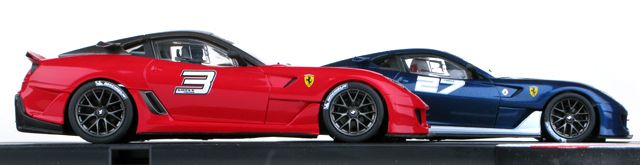
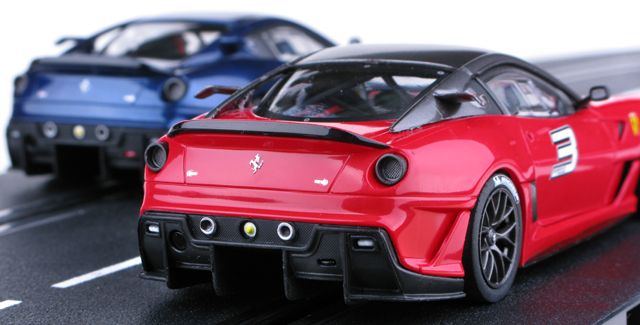
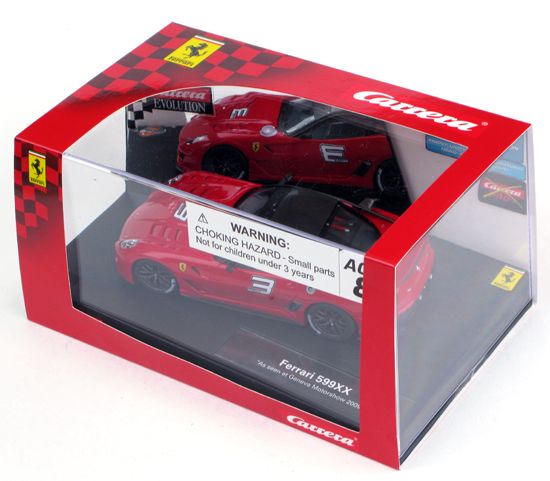
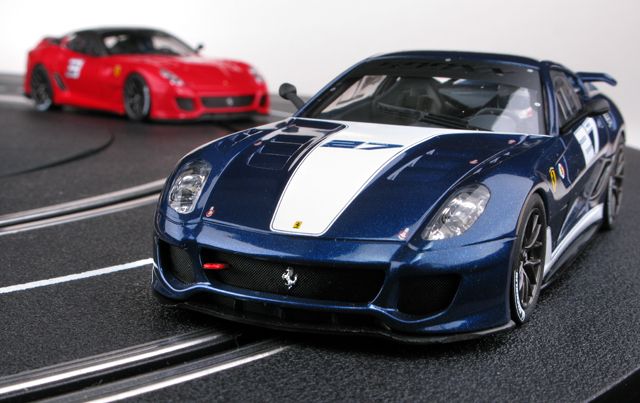
Carrera's New 599XX's

The new Carrera 599xx's. Available in both Digital 132 and Evolution.


Wednesday, September 8, 2010

Buy American, buy BMW!

Couldn't help myself...


BMW Manufacturing announced today that production of the new BMW X3 Sports Activity Vehicle got underway at the South Carolina plant.

In early 2008, BMW Group announced that it would invest $750 million in the South Carolina plant, its largest investment in South Carolina to date. This commitment paved the way for construction of a new Assembly Hall built exclusively to produce the BMW X3 along with a significant expansion to the existing Paint Shop. This 1.5 million square foot addition increases the plant's total footprint to over 4.0 million square feet.

“The launch of the new X3 will mark a historic moment for this plant. I am confident that the BMW X3 is once again going to make our plant a leader in the Sports Activity segment,” stated Josef Kerscher, President, BMW Manufacturing Co. in Spartanburg.

Within the last 7 years, the first-generation BMW X3 has been an extraordinary success story for the BMW Group. The BMW X3 began production in 2004. After production of over 600,000 units, the last vehicle of the first model generation, a Vermilion red metallic BMW X3 xDrive35d, came off the line in Austria yesterday.

With the model change, production of the X3 was relocated to the South Carolina plant based on existing manufacturing proficiency of the BMW X5 and X6 models. The US plant has become the expertise center for the BMW X Models. The addition of the third model to the plant's vehicle mix has created several hundred new jobs and increased BMW's total investment in South Carolina to $4.6 billion since 1992.

News and photo used with permission from BMW.

Tuesday, September 7, 2010

A passing

Alan Smith of Slot Car Illustrated has reported that John Robinson from MRRC has passed away. This is a really sad day. I had the pleasure of meeting John in 2009 at Toyfair in Germany and he was a wonderful person. He loved slots and it was great to have met him and talked with him via email for years.

You will be missed John.

Dave K
Slot Car News

Monday, September 6, 2010

Modern LMP Slot Car Shootout

I've long been a fan of American LeMans/IMSA racing. Aside from a few trips to Daytona when IMSA sanctioned the Rolex 24, I only got to see these cars race once a year at my local track Mosport. Unfortunately, aside from Petit LeMans at Road Atlanta I don't get to see many of the European prototypes race. That was – until I took up slot car racing as a hobby.

Over the last decade we have been blessed with a plethora of models from a variety of manufacturers of LeMans prototypes. What I set out to do is determine which was the quickest and best suited for some local racing series. To do this, I've reached into my collection and pulled out a cross section of sixteen different cars. I then glued and trued the same formulation of urethane tire to each car, removed the traction magnets, and then tried to set my best Q time on a local wood (22m) and plastic track. The lap times were averaged between the two tracks and the results along with my observations are presented here. It's worth noting that all the cars in this test were run in stock form (minus traction magnets). My goal was to provide home and club racers with a performance benchmark for some of the modern era LMP cars available to us.

Carrera Bentley EXP Speed 8 – 9.009s avg.


9.403s plastic / 8.614s wood / 90g mass / 0g downforce

When I first got into the hobby, Carrera was my go-to brand for magnet racing. The adjustable twin magnet chassis in several of their models and solid build made for excellent magnet racers. Once I started racing without traction magnets in place I started looking elsewhere: namely NINCO, Slot.it and Scaleauto for my fast rides. Sometimes, you can't always find what you're looking for in those other brands so you have to go with what's available. If it's the Bentley EXP Speed 8 then Carrera (aside from a boutique resin model) is the only game in town. This car is the heaviest in my test at 90g and also the slowest. This car lacks good brakes so each corner had to be approached with care otherwise it would deslot and go straight instead of turn in. Front tire rub is part of the problem here as well. A beautiful model but will need a lots of work to turn into a racer.


SCX Audi R8 – 8.902s avg.


9.203s plastic / 8.600s wood / 81g mass / 4g downforce

Audi has had quite a run of success with their R8 series of prototypes. Back in my magnet racing days the R8 was another go-to car. The adjustable traction magnet and light weight along with a motor that only seemed to go faster as the car wore in were the hallmarks of this model. Ditch the traction magnets and the car is still surprisingly good if underpowered. This car could be pushed in the corners though it was lacking in outright speed down the straights. A good starting point for a race car, but will need more power to improve its lap times.


Scalextric Cadillac 2000 LMP – 8.704s avg.


9.219s plastic / 8.188s wood / 75g mass / 2g downforce

This model is well known for raising the bar in terms of detail when it was first released. Not the best magnet car owing to the small button magnet. A few guys in my club have race tuned these cars and they are very competitive with the latest offereings from Slot.it and Scaleauto. Out of the box – not so much. The nose deslots easily in the corners and the guide can pop out if pushed. The chassis is on the fragile side so reinforcement and additional weight are definitely on order here. Not a car I'd like to change motors on frequently owing to the delicacy of the chassis, but definitely lots of tuning potential here.

SCX Dome S101 Judd – 8.674s avg.


9.219s plastic / 8.188s wood / 75g mass / 2g downforce

Another cool LeMans livery from SCX. The Dome differs from the Audi in terms of chassis design with its pivoting pod vs. the flat chassis on the Audi, though both models use a similar adjustable magnet design. Without the magnet in place the rocking motor pod can be a hindrance in terms of performance by allowing the tires to rub the inside of the fenders. I broke from my stock protocol by taping the pod to the chassis to limit movement. A slightly hotter motor than the R8 hustles this car around the track that much quicker. Super bright xenon LEDs light up the track if night racing is your thing. All four wheels were loose on their axles and needed to be glued before track testing. This is another model with lots of tuning potential. It's just not a race winner in non-magnet form out of the box.


Scalextric MG/Lola EX257 – 8.636s avg.


9.026s plastic / 8.322s wood / 69g mass, 0g downforce

Scalextric had obviously taken what they learned with their Cadillac and applied those lessons here. Beautiful detail, they replaced the button mag with a bar magnet which made this car the defacto standard among magnet racers. Ditch the mag and we're left with a decent performer. I've raced against these cars in a higher state of tune and they can be quick in non-magnet form. Chassis fragility is an issue that the tuner will have to deal with along with the pop out guid. Also, clearance over the crown gear can be an issue so backing off the screws that hold the rear cowl may be necessary. Not bad – but not great.


NINCO Acura ARX01b – 8.291s avg.


8.485s plastic / 8.096s wood / 81g mass / 8g downforce

Once I started racing non-magnet LMP cars, NINCO was my go-to brand. The BMW LMRs in my collection were only ever so-so magnet cars, but were really great performers without magnutz, especially with NSR King long can power in place of the NC2s those cars came with. The NC5 in the Acura is a decent mill but lacks the punch to perform at the top in my club. Still, a very drivable car as the average lap time demonstrates. In typical NINCO form, all the wheels were loose on the axle and the motor needed to be glued in. One big shunt and the motor will pop out possibly damaging the crown gear. With more motor and bracing between the motor and rear axle mounts this car will only get quicker. I've not yet tried the lightning version of this car: the lack of wheel inserts, odd axle sizing and brittle chassis keep me at bay.

Scalextric Porsche RS Spyder – 8.253s avg.


8.527s plastic / 7.978s wood / 77g mass / 2g downforce

I almost didn't test this car, but getting my *** handed to me by a heavily modded Scalextric Peugeot at my club had me reaching for it when it came time to select models for this review. I'm glad I took the time to glue and true a set of tires for it. Without magnets in place this car was a real blast to drive. The RS Spyder is quick down the straights even with the stock motor and has excellent handling in the corners. I bought another one of these used from a guy in my club so I think I know what my next LMP club racing project car will be…

Spirit Courage C65 – 8.193s avg.


8.297s plastic / 8.088s wood / 80g mass / 15g downforce

This is the first car in this review to feature a motor pod. Spirit provided access holes for front axle set screws on a chassis that came off the plinth fairly straight and flat. The SxXx long can motor has plenty of torque. If anything this car just needs some weight to settle it down. The Spirit Courage is another good mag-free performer out of the box. My local club's ace driver/builder had his eye on this one so maybe there's more to the Courage than meets the eye and my initial impressions?

Fly Racing Lola B98/10 – 8.179s avg.


8.480s plastic / 7.878s wood / 85g mass / 16g downforce

Surprisingly, Fly has managed to fit a long can motor under this short wheelbase low rear deck car. Unique plastic wheels with metal setscrew bosses come standard on this as does a lexan interior. A great handling car, especially on wood.


Avant Slot Peugeot 908 HDi FAP – 8.174s avg.


8.444s plastic / 7.904s wood / 82g mass / 30g downforce

These Avant Slot long can motors are monsters. They remind me of the King motors in terms of torque and power and really make the A/S cars get up and go. The funky chassis takes some fiddling to tune but seems like it has some potential. The guide and guide holders can be fragile so snap spins are something to watch out for when racing cars from this manufacturer. The standard plastic wheels needed to be glued on all the Avant Slot models I tested. The Avant Slot Peugeot is a great car with just a tire change.

Avant Slot Pescarolo – 7.898s avg.


8.095s plastic / 7.701s wood / 79g mass / 15g downforce

For whatever reason, Avant Slot decided the Pescarolo should have a chassis different from their Audi and Peugeot. It is equipped with adjustable front stub axles as opposed to the solid front axle on their other cars. It took some fiddling to keep the rear wheels from rubbing inside the fenders on this car. I ended up taping the motor pod to the chassis to keep that from happening. Still, lots of adjustability built into this chassis, and a very fast car out of the box with only a tire change – over a second a lap quicker than the Carrera Bentley on average. This is a really nicely detailed model of the Pescarolo to boot.


Avant Slot Audi R10 – 7.842s avg.


8.045s plastic / 7.638s wood / 82g mass, 13g downforce

Avant Slot has done the R10 justice with this car: it's good looking, fast, and like all Avant Slot models has plenty of adjustability and speed straight out of the box. I'd like to see Avant Slot up their game a little by including setscrew wheels. At their current price point that is still an affordable upgrade. The monster torque, great handling, and attractive paint and detail are all typical for Avant Slot. What's not to like?


Sloting Plus Reynard 2KQ – 7.812s avg.


7.876s plastic / 7.747s wood / 80g mass / 14g downforce

This is the first RTR car offered from aftermarket tuning parts specialist Sloting Plus. The only issues I had out of the box was that the profile of the stock tires was too high which caused them to rub inside the fenders. This was easily solved since a tire change was part of this test, and the lower profile ex-Radical rear tires fit perfectly on the Sloting Plus Reynard's fronts. Other than that, it's all good: setscrew wheels on all four corners, setscrews anglewinder gears, and multiple adjustment points on the chassis. You pay a little extra for this car but it is worth it. Glue and true your favourite tires and go racing.

Scaleauto Radical SR9 – 7.750 avg.


7.984s plastic / 7.515s wood / 82g mass / 6g downforce

I club raced a Scaleauto Toyota for two years so I had high expectation of this model. While I was not disappointed with the on track performance or the adjustability built into this chassis, I was surprised to see plastic press on wheels on a car at this price point. A solid racer out of the box that only needs minor upgrades for club racing duty.


Slot.it Audi R8C RAW – 7.742s avg.


7.838s plastic / 7.646s wood / 78g mass / 33g downforce

I've been a big fan of Slot.it cars since their first Audi R8C release. This car is miles ahead of their early models. I've used the fully decorated 1999 LeMans #9 livery from their most recent release on the RAW chassis. The early bodies don't fit over the anglewinder drivetrain and I didn't feel like painting up the orange body so it's a bit of an expensive upgrade. Still, this car is super fast right out of the box and one of the fastest in my collection. The RAW comes with multiple spur gears, setscrew rear wheels, and a lexan interior to really lighten things up. Even with the stock injection molded interior this car almost topped the timesheets. The Slot.it Audi is a pricey car but worth it in terms of how well it performs on the track. Still, it would be nice to see Slot.it produce a car that is modeled on something from this millennium, let alone this decade as the R8C body is getting a little long in the tooth. I only mention this since my club's racing series along with some proxy races have a ten year cutoff which this '99 LeMans entrant has passed.

SCX Audi R8 Pro – 7.599s avg.


7.911s plastic / 7.286s wood / 89g mass / 18g downforce

I have to admit that this car is not totally stock. I swapped out the Pro Speed motor on my early release model for an RX4H which is now standard issue on the Pro Audis. Aside from the motor swap and a change to club spec urethane tires, I removed the mechanical brake mechanism that also comes standard. Otherwise: stock chassis, motor, gears, wheels, and axles. The results: this car is a rocket! Light bodywork, decent spec components, and the hot 25k motor really hustle this car around the track. Until I get one of the other cars on this list running faster, the SCX Audi R8 Pro is my go-to club racer.

Thank-you to Mini Grid in Toronto for the use of their 22.1m Scalextric Sport test track, and to Super Rat for the use of his superb 21.7m 'Ring test track and the urethane club tires.

-Van LaPointe

Sunday, September 5, 2010

First Drive: 2009 Infiniti FX35 Automotive Beauty


First Drive: 2009 Infiniti FX35 Automotive BeautyThe Infiniti FX35 gets an improved 303-horsepower V6 engine

Of all the vehicles I have tested, one of the least likely candidates for cult classic status is Infiniti's FX35. Oh, sure, from its inception it sported a striking visage, what with its "bionic cheetah" styling, big ol' wheels and a countenance that is just a bit more daring than your average sport-utility replicant.

But, SUVs, sporty or not, are a dime a dozen these days and, except for odd creatures with specific abilities -- such as Land Rovers -- few seem to generate much loyalty. Everyone might lust after an SUV (even if they don't buy one for economic reasons), but few are undyingly loyal to a specific vehicle -- except for the first-generation FX35.

I have known many an Infiniti owner who swears by them, enough that most actually lament the end of their lease. Convinced that they entered the leasing market to switch vehicles, many FX35 owners have trouble giving up their old paint.

In marketing circles, the loyalty to the first-gen FX35 was even odder as it was the runt of the litter. Pride of place in the FX series went to the FX45, powered by a 4.5-litre V8. But, as all powerful as the 45 was, it was a rough-riding beast that sacrificed much in the way of creature comforts for its sporting aptitude. No such comprises marred the FX35 and, for a select crowd, there was nowhere they could get a dramatically styled SUV with so much performance for so little money. In other words, there are some very big shoes for the totally revamped 2009 version to fill.

One could accuse Infiniti of wimping out a little in the styling department, as the 2009 version doesn't look much different from the '08. But, to give Nissan's luxury brand credit, at least the modest changes the company made haven't softened the FX's edge. The new model's gaping front grille looks even more predatory than before and the bulges on its quarter panels are a little more pronounced.

It's under the hood-- where the updated VQ35HR 3.5L V6 lives -- where the real upgrades have transpired. Now breathing through twin throttle bodies, the FX35 boasts 303 horsepower. That's enough muscle for a mid-six-second run to 100 kilometres an hour, reason enough to (almost) forget about the fuel-hogging 5.0L FX50 version.
First Drive: 2009 Infiniti FX35 Automotive Beauty
What's truly surprising is how sporting the six-cylinder engine sounds. V6s are notoriously difficult to make aurally appealing. Just ask Mercedes, which, despite its many abilities, still hasn't found a way to make the C-Class family of V6s sound like anything other than a tramp steamer. The Infiniti motor, on the other hand, sounds rorty as all get out, like it wants to--as Eddie Murphy sang with mediocrity -- party all the time. Matched to a close-ratio, seven-speed automatic with paddle shifters, the 3.5L likes to spin, its penchant for high rpm very much like Nissan's 370Z sports coupe. The allusion is apt since its engine is all but identical.

The FX35 also does an admirable job of emulating the Z's cornering ability. Though it rides on higher-profile, 18-inch tires rather than the FX50's 20s, there's still plenty of grip and precious little roll. It seems (oxy)moronic to buy an SUV so it can emulate a sports car, but, if that's what you want, that's what the FX35 delivers. It also does so without the buckboard ride of its V8-powered sibling (or the BMW X5 that the FX50 so slavishly tries to emulate). It may not be Lexus RX soft, but it won't shake the fillings out of your teeth.

Inside, there's an elegance that was missing from the first generation. The '09's build quality is excellent as are the materials. And even if they aren't quite up to Audi's top-notch standards, they'll do quite nicely. The FX35's cabin also doesn't lack for amenities, loaded to the gills (properly packaged, of course) with one of the better navigation systems, an excellent stereo and ventilated as well as heated seats. But, the killer app -- that technological thingy you can boast to all your friends -- is Infiniti's Around View Monitor system, which essentially offers a 360-degree view of everything around the vehicle via a set of four exterior cameras and the navi system's LED screen.

In just about every way, the 2009 FX35 improves upon its predecessor. It is larger, sportier, more powerful and better appointed -- succeeding where so many sophomore efforts have failed. The question, then, is whether those improvements are sufficient to guarantee the second-generation model the same cult status the original enjoyed.
First Drive: 2009 Infiniti FX35 Automotive Beauty
THE SPECS

Type of vehicle: All-wheel-drive, mid-sized SUV

Engine: 3.5L DOHC V6

Power :303 hp @ 6,900 rpm; 262 lb-ft of torque @ 4,800 rpm

Transmission: Seven-speed manumatic

Brakes: Four-wheel disc with ABS

Tires: P265/60R18

Price: base/as tested: $50,700/$56,450

Destination charge: $1,825

Transport Canada fuel economy L/100 km: 13.3 city, 9.3 hwy.

Standard features: Power door locks, windows and mirrors, dual-zone climate control air conditioning, Bose 11-speaker AM/FM/ CD/MP3 audio system, XM satellite radio, steering wheel-mounted audio controls, Bluetooth hands-free phone system, cruise control, power glass sunroof, information display, power tilt and telescopic steering wheel, leather seats, eight-way power front seats, heated and cooled front seats, auto headlights, dual front air bags, front seat side air bags, front and rear side curtain air bags, rollover sensor, immobilizer and antitheft systems

2009 Jaguar XFR Automotive Beauty


2009 Jaguar XFR Automotive Beauty
You know you're suffering from hp-war battle fatigue when your first reaction to the news the Jaguar XFR's all-new, supercharged 5.0L direct-injection V-8 develops 510 hp is a faintly disappointed "Oh..." It might outgun the 500-hp BMW M5 and the 507-hp Mercedes-Benz E63 AMG, but it comes up short against Cadillac's mighty 556-hp CTS-V and Audi's head-banging 572-hp RS6. We're here to tell you, however, that sheer horsepower ain't everything. Just point the new XFR at your favorite stretch of gnarly two-lane, nail the gas, and you'll soon see what we mean.

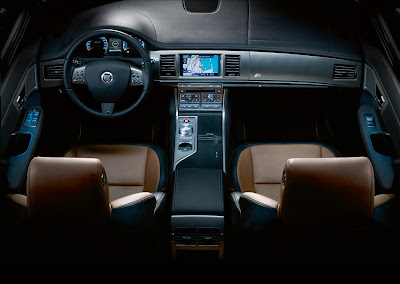
The XFR is, of course, the new flagship car in an upgraded and expanded XF range for the 2010 model year. By now you will have noticed the entirely predictable exterior mods: a new front bumper fascia with large air intakes, deeper sills, a vented hood, new 20-in. alloy wheels, and quad tailpipes. Inside, the XFR retains the XF's cool and charismatic interior design, though Dark Oak veneer is the standard wood trim, complementing a unique dark mesh-aluminum dash panel. The XFR's front seats feature electrically adjustable bolsters for greater side support.


2009 Jaguar XFR Automotive Beauty
The big news is all under the skin: suspension tweaks that include magneto-rheological shocks, bigger brakes, an active differential, and the supercharged version of the all-new AJ-V8 Gen III engine.
2009 Jaguar XFR Automotive Beauty
The 5.0L Gen III has been designed in-house at Jaguar. The new engine is almost an inch shorter than the current 4.2L V-8, thanks to the relocation of the oil pump. The aluminum block is now a high-pressure die-cast item with cross-bolted main bearing caps. The four-valve cylinder heads are made from recycled aluminum, and the camshafts feature variable valve timing activated by the torque motions of the valves themselves instead of oil pressure, enabling the oil pump to be reduced in size. The engine features what Jaguar claims is an industry-first direct-injection system with centrally mounted, multihole, spray-guided injectors.

Running With the Big Dogs Automotive Beauty

Running With the Big Dogs Automotive Beauty

The 2010 Jaguar XFR sneaks up on you. You have to drive with one eye on the speedometer, cross-checking your perception of speed with the reality displayed in black, white and red. The XFR is not a raw-edged racing sedan; it's a supercharged 510-horsepower express that baits the BMW M5 with its sheer sophistication.

The Jaguar XFR is a fast, beautiful and very British challenge to the hegemony of German sport sedans, good enough to makes moustaches quiver in Ingolstadt, Munich and Stuttgart. If the introduction of the XF sedan last year woke Jaguar from its self-induced slumber, the 2010 XFR gives it a potent shot of caffeine.

With the 2010 Jaguar XFR, the guys at Jag have finally delivered the car they've been promising ever since Ford began pumping money into the company in 1990. It's ironic that new owner Tata Motors will be the one to get the credit.

As Always, It Starts With an Engine
It's been a long time coming, but the new 5.0-liter Jaguar V8 is finally with us. A naturally aspirated example will follow soon, but it's the supercharged version that concerns us here. It might be known as the AJ-V8 Gen III, but this is effectively an all-new motor with just two parts shared with the old 4.2-liter V8. The key technology in this R-Type application is direct injection, variable valve timing for both intake and exhaust, twin intercoolers and the latest Roots-type, twin-vortex supercharger.

Turbochargers have been in the news a lot lately, especially with BMW's decision to implement the technology in its street cars, but a new generation of supercharger technology has also recently arrived. Jaguar chose to continue its past work with supercharging in the interests of throttle response, efficiency and packaging. Now that AMG has largely abandoned the Kompressor, the use of supercharging also gives the Jag a key point of difference compared with its German rivals. The new engine is mated to the familiar ZF 6HP28 six-speed automatic, although it's been uprated to cope with the extra thrust.

Running With the Big Dogs Automotive Beauty
And the thrust ratings are certainly impressive, as the Jaguar engineers targeted 500 hp in the belief that this is now a prerequisite for entry in the hyper-sedan club. To this end, the 2010 Jaguar XFR's supercharged 5.0-liter V8 offers up 510 hp between 6,000 and 6,500 rpm, with 461 pound-feet of torque between 2,500 and 5,500 rpm. This compares pretty impressively with the Audi RS6's ratings of 580 hp and 479 lb-ft of torque, the BMW M5's output of 500 hp and 383 lb-ft of torque and the Mercedes-Benz E63 AMG's 507 hp and 464 lb-ft of torque.

Get Down the Road
Those figures are impressive, even in a car that weighs 4,169 pounds. Jaguar claims the XFR gets to 60 mph from a standstill in 4.6 seconds on the way to the quarter-mile in 13.1 seconds. It accelerates from 50 mph to 70 mph in just 1.9 seconds and top speed is electronically limited to 155 mph. This is a thunderous car, and you don't have to work for the performance as you do in the naturally aspirated Merc or BeeEm. You rely not on the power but on the huge dollops of torque served up by the compressor.

This distinctive power production together with the superbly smooth gearbox is the key to the XFR sedan's stealthy performance. Plus the engine is so quiet that you're never aware that it's working very hard. Jaguar has all but eliminated the supercharger whine that always laid down a soundtrack to the old blown 4.2-liter V8, and the 5.0-liter V8 emits a deep, bass woofle that's never more than subdued. And just like the 2010 Ford Mustang and 2009 Ford Focus RS, there's a system in place to introduce engine sounds into the cockpit for a little more personality.

Nevertheless, this engine is actually too quiet. After all, if you've spent this much on a sport sedan, you deserve a bit of theater. The 2010 Jaguar XFR is another modern car that sounds better from the sidewalk than it does from the driver seat. Perhaps Jaguar might do well to offer an optional version of the new active exhaust system featured by the latest Jaguar XKR sports car.

Running With the Big Dogs Automotive Beauty
A Sport Sedan That's Sporting
There are two significant chassis developments that the R-Type designation brings to the XF sedan: Active Differential Control (ADC) and Adaptive Dynamics. ADC is simply a differential that uses electronics to control the torque distributed to each wheel, operating only when required. The differential control works in conjunction with the stability control to manipulate the horsepower in all road conditions. It is hugely effective, enabling the car to pull away smoothly and cleanly with significant steering input, even on a wet surface.

Meanwhile, the Adaptive Dynamics system modifies the throttle and gearbox response depending on the way you're driving, while also altering the parameters of the continuously variable suspension damping. Put simply, it recognizes that you now want to play and will quickly switch to a more aggressive damping setting. As a result, you can take advantage of the suspension's comfort without having to sacrifice readiness for the fun zones.

Of course, this technology also makes the 2010 Jaguar XFR nowhere near as raw as an M5. The BeeEm demands your full attention, all of the time. The Jag isn't like that. The ride, while significantly firmer than a standard XF, is still pleasingly supple. Even with standard 20-inch wheels and tires plus a fast-acting steering ratio, the R-Type feels more sophisticated than the M-car. Yet this shouldn't be mistaken for a lack of talent, or ambition. The XFR sedan is stealthy, but still capable and entertaining.

The harder you try, the better it responds. You brake hard and deep into the corner (the front discs now measure 14.9 inches) to offset any initial understeer and then lean on the throttle pedal and ride the engine's torque. In high-speed corners, the XFR starts to feel lighter and smaller than it actually is, helped by crisp, accurate and well-weighted steering that's significantly better than that of the opposition. The six-speed ZF automatic is also an ideal foil for the V8, swapping cogs swifty with the aid of the shift paddles on the steering wheel and, in manual mode, refusing to change up without human intervention.

The stability control also has two modes: standard and track. In theory, the latter allows you to play a little, but it still intervenes strongly and relatively early. Of course, you can also turn the system off altogether, at which point the Jag can easily be tempted into glamorous, heroic powerslides, the sort of thing Jaguar development driver Mike Cross has spent a lifetime perfecting. The Jag XFR is much more amenable to oversteer than an M5 or an RS6. It isn't the Jag's default setting, but if you want to be a hooligan, it's happy to oblige.

The Look of Speed
The XF has been designed from the outset as a sport sedan, but the R-Type has given it an added dose of machismo. The chrome-mesh air ducts in the redesigned front fenders and the usual R-Type mesh grille are the most obvious visual changes that contribute to the car's aggressive new face. You'll also notice a deeper front bumper, louvers in the hood, extended rocker-sill skirts, a subtle spoiler on the deck lid, quad exhaust tips and of course the big 20-inch wheels inscribed with "supercharged." It's a comprehensive package that stays on the right side of tasteful.

The revisions within the interior are modest. You get discreet "R" badges on the steering wheel and fascia, a new twist to the aluminum trim, plus sport seats that move in 14 different directions. The only other tweak is to the instrument dials, which now boast a "supercharged" logo and a red needle. The Jaguar XFR remains a thoroughly nice place to be, even if there isn't as much room in the rear seat as you'd find in the Audi RS6.
Running With the Big Dogs Automotive Beauty
The Price of Speed
The 2010 Jaguar XFR will come with a price tag of $80,000, which is a long way from the $52,000 of the entry-level XF sedan, but also a fair way below the supercharged $96,000 XKR coupe. Most important, the XFR sedan's price tag is $5,500 less than a BMW M5.

Just as with the XF sedan, the new R-Type probably won't get the instant badge recognition of a car from AMG, the M division or Quattro GmbH, but this new Jag deserves to run with the best. Handsome, massively quick and hugely capable, this car fulfills the XF's potential.